
ROCHELLE – The District 231 school board held its regular monthly meeting Tuesday night, introducing new staff members across the district to the board. Stepping Stones preschool welcomed three new teachers, including two monolingual teachers and one dual-language teacher. Lincoln School added a new first-grade teacher, while Central School hired four teachers to expand second- and third-grade classes. Tilton School introduced four new teachers for grades four and five, some of whom began the year navigating a new building under construction. The middle school added several staff members, including teachers for sixth through eighth grades, an art teacher, a computer lab teacher, an ESL teacher, and a long-term substitute for eighth-grade math.
Superintendent Dr. Jason Harper acknowledged the contributions of both returning and new staff, noting the support provided by the mentorship efforts of Ms. Kathy Prestergaard for first-year teachers.
The board also welcomed Amy Hayden, the new administrative liaison to the parent-teacher organization. Hayden outlined goals for the year, including enhancing communication between parents, teachers, and administrators, supporting school events, and building a volunteer database to help organize activities.
Celeste Canfield, District Language Services Director, provided an update on the BPAC and Dual Language Family Advisory Committee. She outlined plans to host dual language showcases across grade levels, provide online resources for family engagement, and continue efforts to fund scholarships for graduating seniors.
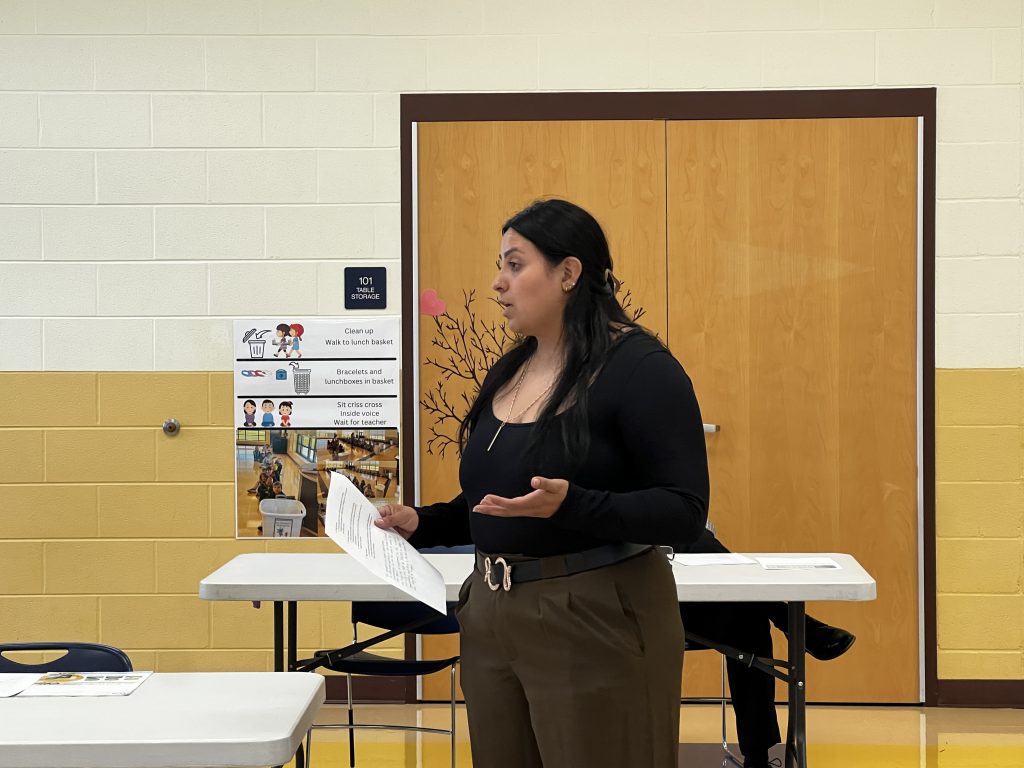
The board received an update on the HUB after-school program from Director Yazmin Nambo. Due to uncertain federal funding, the program is operating in a reduced form. The program, which serves about 100 students in kindergarten through eighth grade, previously enrolled more than 225 but has already cut enrollment in half and eliminated before school care. Students currently receive transportation, a snack, and academic support at Central, Lincoln and the Middle School. Without new funding, families will need to seek other childcare options in 2026.
Administrators also discussed the district’s improvement plans for the year. Over 100 employees participated in discussions last spring to identify priorities and areas for growth. Four working groups were established to focus on academic assessment, social-emotional learning, academic readiness, and staff retention and recruitment. These efforts are part of a multi-year plan to strengthen curriculum, teaching quality, and district-wide coordination.
Visual tools developed by staff allow administrators and teachers to track progress toward district goals in real time. The board was advised that mid-year updates will be provided around December to review progress and determine any additional support needed for staff and students.

Finally the board approved the FY26 budget as presented, showing a projected deficit of about $265,158 for the fiscal year, with total spending estimated near $23 million. District officials said the shortfall is tied to construction costs covered through transfers from reserves, which remain strong despite the planned spending. The budget outlines revenues of about $22.3 million and expenditures of $25.7 million, offset by $6.5 million in fund transfers.